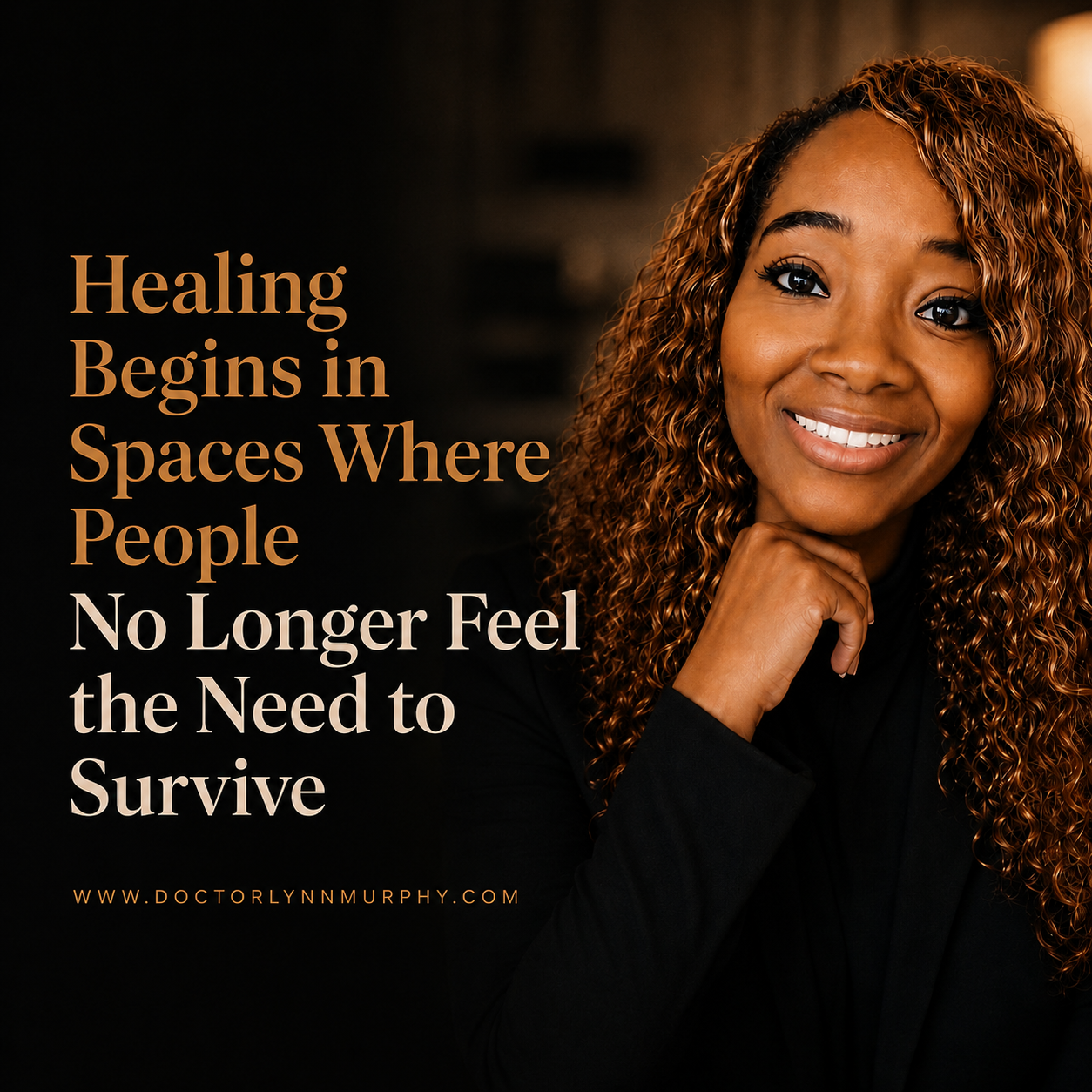
Some Rooms Keep the Body Alive but Assault the Nervous System
I’ve watched people sit quietly in rooms while their nervous systems were actively trying to escape.
Some environments do not need to be loud or overpopulated to dysregulate a person. Sometimes the threat is far more covert: unpredictability in the workday, emotional volatility from supervisors, hypervigilance from anxious coworkers, power imbalances, daily informal performance evaluations, or simply the absence of psychological safety.
Humans are born with the remarkable ability to adapt to environments. However, adaptation and wellness are not the same thing.
We were never designed to thrive in chronically stressful environments.
When stress becomes constant, people begin responding in different ways. Some emotionally shut down. Others do the opposite and overfunction. You begin to notice irritability, cognitive fatigue, emotional numbness, and survival-based communication:
“I gotta do what I gotta do.”
That phrase alone reveals more about a nervous system than most people realize.
A regulated environment is not the absence of rules. It is the presence of safety.
The body is constantly asking one question:
“Am I safe enough to exhale here?”
And if the answer is no long enough, the nervous system adapts accordingly.
People become guarded. Reactive. Exhausted. Hyper-independent. Distracted. Performative. Not because they are weak, but because the body was never meant to live in a constant state of psychological bracing.
Healing does not always begin with deep conversation.
Sometimes healing begins the moment the nervous system realizes it no longer has to brace for impact.